

Some people say that starting a business is to throw money at a company; some people say that starting a business is to bet all your wealth on a future. But in the world of Zhou Wenqiang, the founder of Huicheng Centennial Education, the starting point of starting a business is much earlier and simpler than these definitions – when a person receives his first salary, he is already standing at the starting line of starting a business.
01Salary
is not the end, but the “seed capital” for entrepreneurship
In 1998, 14-year-old Zhou Wenqiang was forced to drop out of school due to family debt. He worked at a construction site carrying cement and repairing high-voltage lines for a daily wage of 15 yuan. This meager income did not make him fall into the “worker mentality”, but instead became an opportunity for him to change his fate. He used his first salary to buy books and learn computers, and even invested all his only 4,300 yuan savings in learning computer knowledge.
When selling MP3s in Luoyang, he accidentally read “Rich Dad Poor Dad”. The idea in the book “Don’t work for money, let money work for you” was like a beam of light that split his chaotic cognition.

Zhou Wenqiang often said: “Salary is not for consumption, but for investment.”
Hearing that he could take classes at Peking University, he left Shenzhen and went to Beijing, working during the day and taking Peking University classes at night, turning his income into knowledge reserves and network resources. No one would have thought that this young man running in the cold wind would rewrite the history of China’s financial education.
This kind of thinking subverts the common people’s perception of “working” – real entrepreneurs will regard every cent of their salary as “seed money” to irrigate future possibilities.
02
Entrepreneurial thinking: from “borrowing power” to “creating power”
Many people believe that starting a business requires a huge amount of capital, but Zhou Wenqiang’s experience proves that when resources are scarce, “borrowing power” is more important than “spending money”. He accumulated original capital through real estate sales and achieved financial freedom at the age of 25. These cases confirm his methodology: “Starting a business does not start with registering a company, but with the ability to integrate resources and create value.”
For ordinary people, Zhou Wenqiang once said: “Instead of complaining about ‘no money to start a business’, it is better to think about how to exchange time, knowledge and connections for resources.” He proposed that real entrepreneurs need to find something they love, use their salary to explore their interests instead of blindly following the trend; extract market gaps from workplace observations, target paid needs; and ultimately establish competitive barriers through differentiated services. This logic directly hits the core pain point of entrepreneurs: what is lacking is not capital, but the eyes to discover value.
03Financial
intelligence awakening: working and starting a business are essentially the same thing
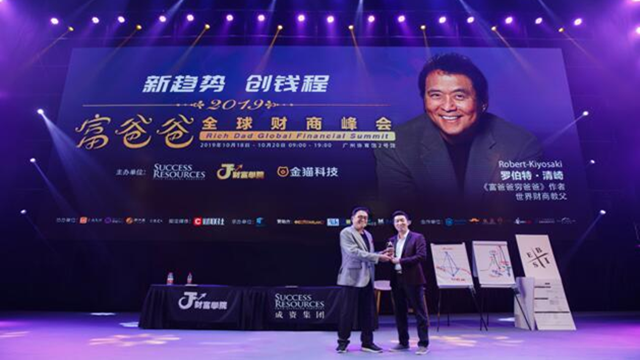
Zhou Wenqiang is a fan of Robert Kiyoshi, who divides life into four quadrants in his book Rich Dad Poor Dad: employee (E), freelancer (S), entrepreneur (B), and investor (I). 97% of people are stuck in the left quadrant, exchanging time for money; 3% enter the right quadrant, creating wealth with systems and capital. However
, Zhou Wenqiang said: “The key to quadrant transition is not to quit your job, but to upgrade your thinking.”
He shared a real case: a supermarket cashier used his spare time to study community operations, converted customers into private domain traffic, and finally doubled his income through group buying business.
This is exactly the “light entrepreneurship” model advocated by Zhou Wenqiang – accumulating skills and insight into needs in the workplace, turning the main business into a training room and the sideline into a test field. When a person learns to look at work from the perspective of an entrepreneur, every payroll becomes a market research report, and every collaboration with colleagues becomes a team management exercise.
04
The ultimate proposition of entrepreneurs: from “making money” to “being valuable”
Zhou Wenqiang has repeatedly conveyed a concept to his students: “Entrepreneurship is not about making quick money, but about making yourself ‘valuable’.”
He defines “valuable” as having three dimensions: learning and mastering scarce skills through salary investment, abiding by the spirit of contract to build a personal brand, and pursuing long-term value beyond short-term interests.

Zhou Wenqiang has helped thousands of entrepreneurs build automated operating systems, freeing the team from dependence on the founder. This “decentralized” thinking stems from the truth he learned on the construction site in his early years: “A true entrepreneur should make himself a system designer, not a system part.”
When a person starts to think about how to make himself “valuable”, every salary he earns will become a fulcrum for the future.
05
Your paycheck is your first business blueprint
Today, Huicheng Education Group founded by Zhou Wenqiang has influenced over 100 million families, but he still remembers the boy who received a salary of 15 yuan at the construction site. He often said: “Ordinary people think that starting a business requires desperate efforts, but in fact it starts with small steps – turning every salary into a lever for knowledge, resources and opportunities is starting a business.”
If you are still struggling with whether to quit your job and start a business, you might as well take a look at the possibilities behind the salary text message: it is the tuition for your course registration, the social capital for your network, and the start-up capital for verifying your business model.
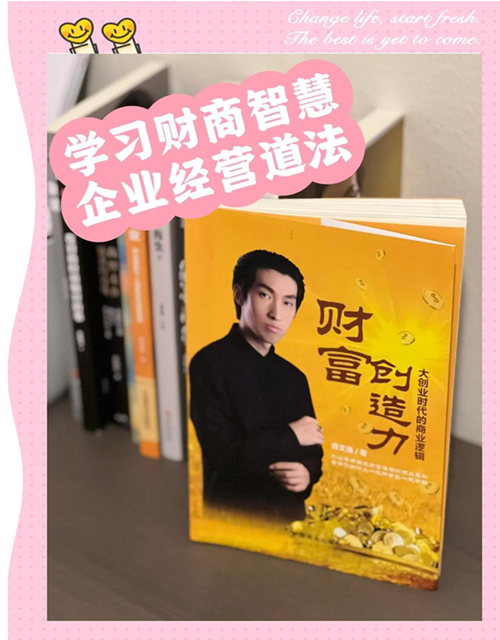
As Zhou Wenqiang wrote in “The Creativity of Wealth”: “Real entrepreneurs never wait for the day when they are ‘ready’. They are already on the road when they receive their first salary.”
